On Kilimanjaro, the route you choose decides more than almost anything else — your summit success rate, your experience and your cost. Machame, Lemosho, Marangu and Rongai are the four main paths to the top. This comparison sorts them out honestly: days, difficulty, acclimatisation, success rate and which route fits whom.
What this page clarifies
The main topics are split into clear sections. Tables, notes and related links make the page easier to compare, not just read.
The four main routes at a glance
Kilimanjaro has seven established routes to the summit, but four of them carry the overwhelming majority of trekkers: Machame, Lemosho, Marangu and Rongai. They differ in length, scenery, comfort and — most importantly — in their success rate, which depends heavily on how many days you spend acclimatising.
The rule of thumb is simple: the more days you walk, the better you acclimatise and the higher your chance of reaching the top. A five-day route is cheaper but riskier; seven to eight days give your body the time it needs to adjust to the thin air.
| Route | Days | Difficulty | Success rate | Character |
|---|---|---|---|---|
| Machame | 6–7 days | moderate | ~85% (7 days) | popular, scenic, great all-rounder |
| Lemosho | 7–8 days | moderate | ~90% (8 days) | best scenery, higher cost |
| Marangu | 5–6 days | easier path, huts | ~50% (5d) / 65% (6d) | hut route, same way up and down |
| Rongai | 6–7 days | moderate | good | dry northern side, quieter |
Machame route — the popular all-rounder
Machame, nicknamed the "Whiskey route", is the most-walked path on the mountain — and for good reason. It packs in varied, spectacular scenery, builds in solid acclimatisation through the "climb high, sleep low" principle, and delivers a high success rate of around 85% on the seven-day version.
The route crosses the famous Barranco Wall, a steep rock face that looks intimidating but is really a fun, hands-on scramble with no technical climbing gear required. The ascent to Lava Tower (around 4,600 m) followed by the descent to Barranco Camp is a deliberate, important acclimatisation step.
Machame suits physically fit hikers who want a scenically stunning route and are happy to camp in tents. If you want more acclimatisation safety, choose the seven-day version over the six-day option — the extra day trims the altitude risk noticeably. The trade-off is company: you will rarely have the trail or camps to yourself in peak season.
Lemosho route — best scenery, highest success rate
The Lemosho route is widely considered the most beautiful approach to Kilimanjaro. It starts on the remote western side and crosses the vast Shira Plateau — a high, open expanse that feels genuinely wild — before merging with the Machame route for the southern circuit.
At seven to eight days, Lemosho offers the most generous acclimatisation of any standard route, and therefore the highest success rate: operators consistently report around 90% on the eight-day itinerary. The extra days simply give your body more time to adjust to the altitude.
The downside is cost. Lemosho is more expensive than Machame, because more days mean more park fees, more food and a larger crew of guides and porters. But if you have the budget and the time, paying for one extra day on the mountain is the cheapest summit insurance there is.
Marangu route — huts instead of tents
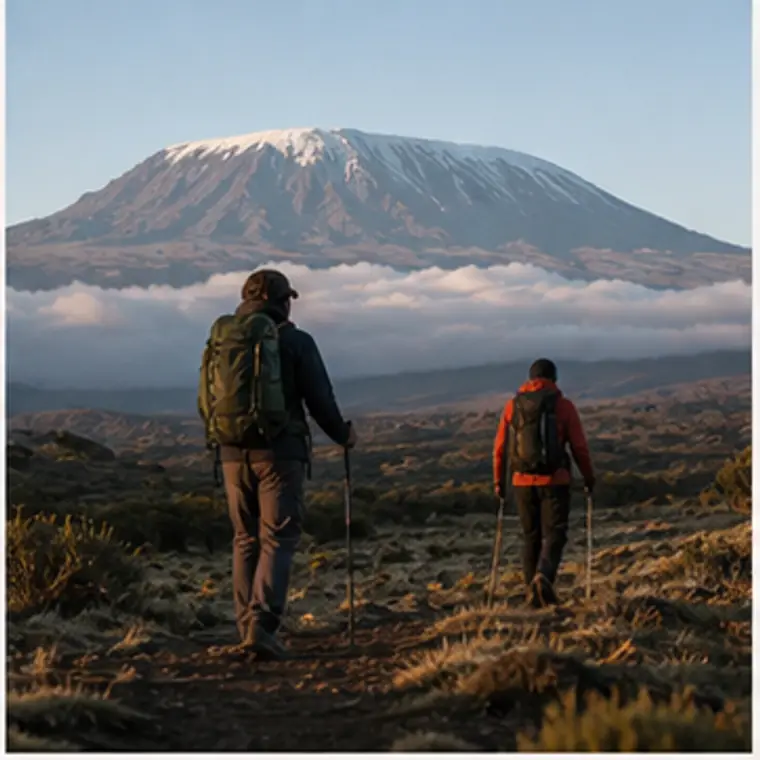
Marangu, the "Coca-Cola route", is the historic original and the only path with permanent huts instead of tents. It is reputed to be the easiest route — and that reputation is precisely what makes it the trap of the four.
Marangu is also the only route that uses the same path for both ascent and descent, which means less scenic variety. More importantly, the standard five-day itinerary is too short for good acclimatisation, and its success rate sits at just around 50% — the lowest of the main routes.
If you choose Marangu, take the six-day version with an extra acclimatisation day at Horombo Hut. That single day lifts the success rate to roughly 65% and transforms the experience. The huts make this route attractive for anyone who prefers a roof and a bunk over sleeping in a tent — just never book the five-day option.
Rongai route — the quiet approach from the north
The Rongai route approaches Kilimanjaro from the north, near the Kenyan border. It is the only major northern route, which makes it noticeably quieter than the busy southern trails — a real advantage for anyone who wants solitude over crowds.
Because the northern side lies in the mountain’s rain shadow, Rongai is drier than the southern routes — a genuine benefit in the wetter shoulder seasons. The landscape is more sparse, but the route offers a true wilderness feel and good chances of wildlife sightings on the lower sections.
Rongai suits anyone seeking peace and wanting to avoid the masses, with gentle, steady gradients that many find kinder on the legs. The success rate is good, especially on the seven-day version. The trail only joins the Marangu route shortly before the final summit push.
Success rate & acclimatisation — why more days matter
The single biggest factor in a successful climb is not fitness — it is acclimatisation. At 5,895 m, Kilimanjaro is high enough that altitude sickness is the most common reason people turn back before the summit. Time, not willpower, is the best defence.
The principle of "climb high, sleep low" — gaining altitude during the day and descending to sleep at a lower camp — helps your body adapt. Routes with more days build this principle in more effectively, which is exactly why they post higher success rates.
Concretely: a five-day route has a success rate of around 50%, a seven-day route around 85%, and an eight-day route up to 90%. Every extra day raises your chances measurably. If you want to play it safe, plan for at least seven days — and walk slowly, the guides’ constant "pole pole".
Which route for whom?
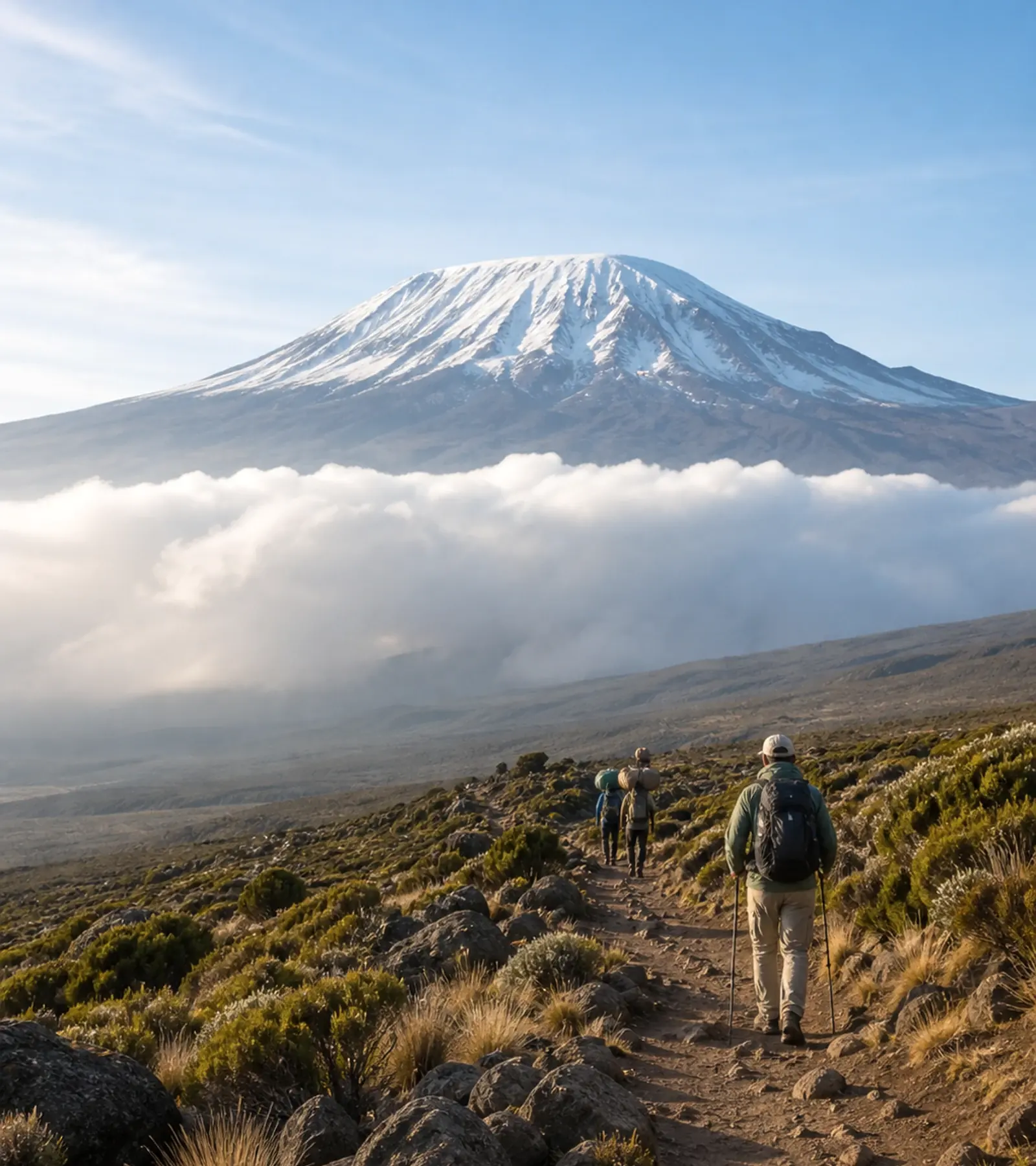
For first-time climbers with a comfortable budget: Lemosho (8 days) — the best acclimatisation, the finest scenery and the highest success rate of all.
For fit hikers on a mid-range budget: Machame (7 days) — popular, scenically superb and a strong success rate at a fairer price.
For anyone who prefers huts: Marangu (6 days, never 5) — a fixed bed and a gentler path. For those seeking quiet: Rongai (7 days) — dry, peaceful and uncrowded, from the north. Tight on time? A six-day Machame still beats a five-day Marangu by a wide margin.
Cost orientation for a Kilimanjaro trek
Costs vary widely by route, duration and operator. As a rough guide (excluding flights, 2025 reference): short routes (5–6 days) from USD 1,800–2,500; standard routes (7 days) USD 2,500–4,000.
Premium operators with better gear, more experienced guides and smaller groups charge USD 4,000–6,000 or more. Very cheap offers (under USD 1,500) usually come at the expense of safety, porter pay and equipment.
Importantly, park fees alone make up a large share of the cost (roughly USD 800–1,000 for a seven-day trek). Extremely cheap offers can barely cover those fees honestly. TanzaGate reviews every Kilimanjaro enquiry for realistic costing and fair conditions, so you know what you are paying for.